2.6 - Refrigerant Sales Restrictions
Regulatory verification date: August 6, 2026
Primary authorities: Clean Air Act Sections 608 and 609, 40 CFR Part 82 Subparts B, F, and G, and current U.S. Environmental Protection Agency refrigerant-sales and retailer-recordkeeping guidance
Course role: Explains who may purchase refrigerant, which certification applies, the limited small-can MVAC exception, seller-verification duties, retailer records, and restrictions on the sale of used refrigerant
Learning Objectives
After completing this section, a student should be able to:
- Identify which refrigerant sales are restricted under Section 608.
- Distinguish the refrigerant-purchase authority associated with Section 608 and Section 609 certification.
- Explain how an employer or authorized representative may purchase refrigerant for certified technicians.
- Apply the limited small-can MVAC exception correctly.
- Identify seller-verification, invoice, and record-retention requirements.
- Distinguish the sale of new refrigerant from the sale or transfer of used refrigerant.
- Apply a step-by-step purchase decision to common stationary-equipment and MVAC scenarios.
Introduction
The prohibition against intentional venting in Section 2.5 - Venting Prohibition controls how refrigerant may be released. The refrigerant sales restriction controls who may purchase refrigerant and under what conditions.
The purpose of the sales restriction is to limit access to ozone-depleting and non-exempt substitute refrigerants to people and organizations that have the required certification or another specifically permitted basis for purchase.
The central rule is:
Refrigerant containing a Class I or Class II substance, and non-exempt substitute refrigerant offered for use as a refrigerant, may be sold only to an allowed purchaser or through a specifically permitted transaction.
The restriction applies to refrigerant in:
- Cylinders.
- Cans.
- Drums.
- Other containers offered as refrigerant.
The restriction generally does not prevent a person from buying a complete appliance or component that contains refrigerant in a fully assembled refrigerant circuit.
Key Concepts
1. Refrigerants Covered by the Sales Restriction
The sales restriction applies to substances that consist wholly or partly of:
- A Class I ozone-depleting substance.
- A Class II ozone-depleting substance.
- A non-exempt substitute used as a refrigerant.
Representative covered refrigerants include:
- CFC-11 and CFC-12.
- HCFC-22 and HCFC-123.
- HFC-134a.
- R-404A.
- R-407C.
- R-410A.
- R-32.
- HFO refrigerants and HFO-containing blends unless the substitute is exempt in the applicable end use.
- Blends containing covered components.
The restriction was extended to HFCs and other non-exempt substitute refrigerants beginning January 1, 2018.
The restriction is not limited to refrigerants with nonzero ODP. A zero-ODP refrigerant can still be a non-exempt substitute subject to the sales restriction.
2. Exempt Substitutes
The Section 608 sales restriction does not apply in the same manner to substitutes that EPA has exempted under 40 CFR § 82.154(a)(1) in the specified end use.
Examples include:
- Carbon dioxide in any application.
- Nitrogen in any application.
- Water in any application.
- Ammonia in the listed commercial or industrial refrigeration and absorption applications.
- Certain hydrocarbons in specified end uses.
An exemption is end-use specific unless the regulation states that the substance is exempt in any application.
A sales exemption does not mean that the substance is:
- Safe to release indoors.
- Acceptable in every appliance.
- A universal retrofit.
- Exempt from fire, building, safety, transportation, or workplace requirements.
3. The Restriction Covers Refrigerant, Not Every Refrigerant-Containing Product
The sales restriction does not generally prohibit sale of:
- A household refrigerator containing refrigerant.
- A window air conditioner containing refrigerant.
- A condensing unit with a fully assembled refrigerant circuit.
- An appliance component containing refrigerant as allowed by the regulation.
- Refrigerant charged into an appliance by a certified technician or qualifying apprentice during maintenance, service, or repair.
A homeowner may therefore purchase a complete factory-charged appliance without holding Section 608 certification. The homeowner may not purchase a cylinder of covered refrigerant for stationary-equipment charging without an allowed purchase basis.
4. Purchase Authority and Service Authority Are Related but Not Identical
The right to buy refrigerant does not by itself authorize every service activity.
A person must still determine:
- Whether the activity requires technician certification.
- Whether the certification type covers the appliance.
- Whether Section 608 or Section 609 applies.
- Whether the refrigerant is acceptable for the end use.
- Whether manufacturer, safety, and code requirements are satisfied.
The sales transaction is only one part of legal refrigerant handling.
Section 608 Purchase Authority
1. Individual Section 608 Certified Technician
A technician holding a valid Section 608 certification can purchase covered refrigerant for stationary refrigeration and air-conditioning work.
Section 608 certification types are:
- Type I.
- Type II.
- Type III.
- Universal.
EPA describes Section 608 purchase authority as consistent with the stationary appliances covered by the certification. The technician’s equipment-service authority remains limited by the certification type.
Examples:
| Certification | Representative Equipment Scope |
|---|---|
| Type I | Small appliances |
| Type II | Medium-, high-, and very-high-pressure appliances |
| Type III | Low-pressure appliances |
| Universal | Types I, II, and III |
A refrigerant-specific training card does not replace Section 608 certification.
2. Employer of a Section 608 Certified Technician
A company, facility, or other employer may purchase refrigerant when it:
- Employs at least one properly certified Section 608 technician.
- Provides the seller with proof of that employment and certification.
Acceptable documentation may include:
- A copy of the technician’s certification card.
- A technician certificate issued by an approved certification program.
- A letter or company document identifying the certified technician.
- Other documentation showing that the buyer currently employs a certified technician.
The employer is the purchaser even when another employee completes the physical transaction.
3. Authorized Representative
A certified technician or qualifying employer may authorize another person to:
- Pick up refrigerant.
- Receive a delivery.
- Conduct the transaction under the established purchasing account.
Examples include:
- Office manager.
- Purchasing agent.
- Warehouse employee.
- Coworker.
- Delivery receiver.
The account holder must be able to demonstrate that the buyer is certified or currently employs a certified technician.
The seller remains responsible for determining whether the person claiming to be an authorized representative is actually authorized.
4. Change in Employment Status
A purchasing facility should notify the seller when the certified technician supporting the account is no longer employed.
After the seller knows that the facility no longer employs a qualifying certified technician, the seller must not continue selling covered refrigerant to that facility based on the former employee’s certification.
Using a former employee’s certification without authorization can result in:
- Improper sales.
- Misuse of the technician’s credential.
- False records.
- Enforcement action.
Section 609 Purchase Authority and Limitations
1. Section 609 Applies to MVAC Refrigerant
A Section 609 certified technician may purchase refrigerant that is:
- Acceptable for use in motor vehicle air conditioners.
- Purchased for MVAC service within the Section 609 scope.
A qualifying employer or authorized representative may purchase for Section 609 certified technicians when the required proof is provided.
2. Section 609 Does Not Authorize Stationary-Refrigerant Purchases
A Section 609 technician may not purchase refrigerant intended for stationary refrigeration or air-conditioning equipment merely because:
- The refrigerant is sold in a small container.
- The refrigerant can also be used in some vehicles.
- The technician services automobiles.
- The technician owns the stationary appliance.
- The container is labeled for professional use.
EPA states that Section 609 certified technicians cannot purchase refrigerant intended for stationary equipment, regardless of container size.
3. Section 608 Universal Does Not Replace Section 609 for MVAC Service
A Universal Section 608 credential does not automatically authorize paid or bartered MVAC service.
As explained in Section 1.4 - Section 608 and Section 609:
- Section 608 primarily covers stationary appliances.
- Section 609 covers MVAC service for consideration.
- The purchase and service pathways must be evaluated separately.
4. Small Containers of Ozone-Depleting MVAC Refrigerant
The small-can DIY exception described later applies to non-exempt substitute refrigerant, not to ozone-depleting CFC refrigerant.
Current EPA MVAC guidance states that:
- CFC-12 in a container of less than 20 pounds may be sold only to a Section 609 certified technician.
- The seller must verify the purchaser’s Section 609 certification.
- Section 608 certification alone does not authorize purchase of these smaller CFC-12 containers for use in MVACs.
This is a different rule from the two-pound-or-less substitute-refrigerant exception.
Small-Can MVAC Exception
1. Purpose of the Exception
EPA permits uncertified consumers to purchase limited quantities of non-exempt substitute refrigerant for do-it-yourself service of their own MVAC systems when the container meets specified requirements.
This is a narrow sales exception. It is not:
- A general stationary-equipment exception.
- A CFC-12 exception.
- Permission to perform MVAC service for payment.
- Permission to vent refrigerant.
- Permission to use the refrigerant in an unapproved application.
2. Required Conditions
For the certification exception to apply, all of the following must be true:
- The refrigerant is a non-exempt substitute refrigerant.
- The refrigerant is intended for use in an MVAC.
- The container is designed to hold two pounds or less of refrigerant.
- The container uses a unique fitting.
- If manufactured or imported on or after January 1, 2018, the container has a compliant self-sealing valve.
A typical example is a small can of HFC-134a sold for do-it-yourself passenger-vehicle air-conditioning service.
3. Self-Sealing Valve Requirement
A qualifying container manufactured or imported on or after January 1, 2018 must have a single self-sealing valve that:
- Automatically closes when the container is not dispensing refrigerant.
- Limits leakage from the closed container.
The regulatory leakage limit is:
3.00 grams per year or less
The requirement applies to:
- New full containers.
- Partially used containers.
This manufacturing requirement reduces emissions from partly used cans that remain in storage.
4. Unique Fitting
The unique fitting helps prevent:
- Charging the wrong refrigerant.
- Connecting incompatible service tools.
- Mixing refrigerants.
- Misusing the small-can exception.
An adapter should not be used to defeat the intended unique-fitting system.
5. Important Boundary Cases
| Scenario | Certification Required to Purchase? |
|---|---|
| One-pound can of HFC-134a for DIY MVAC use with required fitting and valve | No, under the small-can exception |
| Two-pound qualifying can of substitute refrigerant for MVAC use | No, if all exception conditions are met |
| Three-pound can of HFC-134a | Yes |
| One-pound can of R-410A intended for a stationary heat pump | Yes |
| One-pound container of CFC-12 for MVAC use | Section 609 certification required |
| Small substitute-refrigerant can used for paid MVAC service | Section 609 service certification still required |
| Small can lacking the required fitting or compliant valve | Does not qualify for the exception |
6. “Two Pounds or Less” Versus “Fewer Than Two Pounds”
Older summaries sometimes describe the exception as “less than two pounds” or “fewer than two pounds.”
The current regulatory text uses:
A container designed to hold two pounds or less of refrigerant.
For current regulatory work, use the exact language in 40 CFR § 82.154.
Other Allowed Purchasers and Transactions
1. Refrigerant Purchased for Resale
Refrigerant may be sold for eventual resale to:
- Certified Section 608 technicians.
- Certified Section 609 technicians within their scope.
- Qualifying employers.
- Appliance manufacturers.
- Other legally permitted purchasers.
The seller is responsible for ensuring that the customer fits an allowed category.
EPA recommends that the seller obtain a signed statement indicating that the refrigerant is being purchased only for eventual resale to allowed purchasers.
A resale statement should include:
- Purchaser’s name.
- Business address.
- Purpose of the purchase.
- Confirmation that the refrigerant will be resold only through lawful channels.
2. Appliance Manufacturers
Refrigerant may be sold directly to an appliance manufacturer for use in manufacturing appliances.
The manufacturer must still comply with:
- Applicable refrigerant-use restrictions.
- SNAP requirements.
- AIM Act requirements where applicable.
- Equipment safety and labeling requirements.
- Other federal and state laws.
3. Refrigerant Contained in an Appliance or Component
The restriction permits sale of refrigerant contained in:
- An appliance with a fully assembled refrigerant circuit.
- An appliance component covered by the regulation.
This is why ordinary consumers can purchase factory-charged refrigerators, air conditioners, and similar products.
4. Refrigerant Charged During Service
A certified technician or qualifying apprentice may charge refrigerant into an appliance during maintenance, service, or repair.
The appliance owner is purchasing a completed service rather than taking possession of a cylinder for unrestricted personal use.
The technician must still comply with:
- Certification requirements.
- Service-practice requirements.
- Recovery and venting rules.
- Refrigerant acceptability.
- Manufacturer instructions.
- Safety requirements.
Seller Verification Responsibilities
1. Seller Must Verify the Purchase Basis
A refrigerant seller is responsible for confirming that the purchaser is allowed to buy the refrigerant.
Depending on the transaction, the seller may need to verify:
- Section 608 certification.
- Section 609 certification.
- Employment of a certified technician.
- Authorized-representative status.
- Resale status.
- Appliance-manufacturer status.
- Qualification for the small-can MVAC exception.
The seller must not rely solely on:
- A purchaser’s job title.
- A verbal claim without required support.
- Ownership of an HVAC company.
- Possession of tools.
- Prior purchases.
- A refrigerant-specific training card that is not an EPA Section 608 or Section 609 credential.
2. Individual Technician Documentation
The seller may verify an individual purchaser using:
- Certification card.
- Certification certificate.
- Other documentation issued by the EPA-approved certification program.
The technician should preserve:
- The certification card or certificate.
- Certification number.
- Issuing organization.
- Backup copies.
3. Employer Documentation
When an employer purchases for certified technicians, the seller should obtain documentation showing:
- Employer or facility name.
- Certified technician’s name.
- Copy of the technician’s credential.
- Confirmation that the technician is currently employed.
- Authorized purchasers or delivery recipients where used.
The seller must keep the employment documentation provided by the buyer.
4. Remote, Online, and Delivered Sales
Online and remote sellers are subject to the same federal restriction.
A sale does not become unrestricted because it occurs through:
- Website.
- Online marketplace.
- Telephone order.
- Mail order.
- Delivery account.
- Unattended delivery.
The seller must establish an allowed purchasing basis before completing the sale.
A delivery can be made without obtaining the recipient’s signature when the seller knows that the refrigerant will be received by the purchaser or authorized representative. This does not eliminate the underlying verification and recordkeeping duties.
Seller Recordkeeping
1. Required Invoice Information
A seller of covered refrigerant must retain invoices showing:
- Name of purchaser.
- Date of sale.
- Quantity of refrigerant purchased.
The invoice requirement applies to sales of:
- Class I refrigerant.
- Class II refrigerant.
- Non-exempt substitute refrigerant.
The regulation provides exceptions for:
- Exempt substitutes in the specified exempt end uses.
- Qualifying small cans of MVAC substitute refrigerant.
2. Employment Documentation
When the buyer relies on employment of a certified technician, the seller must retain the documentation provided to demonstrate that employment.
Examples include:
- Copy of certification card.
- Employer letter.
- Certified-technician list.
- Account authorization record.
3. Retention Period
Sales-restriction records must be kept for:
Three years
This includes the applicable invoices and employment documentation.
Manufacturers of qualifying small MVAC cans must also retain the specified self-sealing-valve compliance records for the required three-year period.
4. Technician Record
A Section 608 technician must keep proof of certification at the technician’s place of business and retain it until three years after the person is no longer operating as a technician.
This technician obligation is separate from the seller’s invoice and purchaser-verification records.
5. Accuracy and Integrity
Records must accurately reflect:
- Actual purchaser.
- Actual quantity.
- Actual date.
- Certification or employment basis.
- Resale purpose when applicable.
False, altered, borrowed, or misused certification documents can support enforcement action against:
- Buyer.
- Seller.
- Employer.
- Other involved parties.
Detailed enforcement and professional-responsibility issues are developed in Section 2.7 - Enforcement Recordkeeping and Professional Responsibility.
Sale of Used Refrigerant
1. General Rule
Used Class I, Class II, or non-exempt substitute refrigerant generally may not be sold or distributed for use as refrigerant unless it has been reclaimed by an EPA-certified reclaimer.
Reclamation requires:
- Processing to the specified purity.
- Verification using the applicable laboratory method.
- Certification of the reclaimer by EPA.
2. Same-Owner Reuse
Recovered or recycled refrigerant may be returned to:
- The same appliance.
- Another appliance owned by the same person.
It does not have to be reclaimed solely because it moves between appliances owned by the same person.
This same-owner allowance does not permit sale to a different owner.
3. Important Used-Refrigerant Exceptions
The regulation includes limited situations in which used refrigerant may be transferred without the standard reclamation pathway, including:
- Refrigerant used only in an MVAC or MVAC-like appliance and recycled for use only in an MVAC or MVAC-like appliance under Section 609 requirements.
- Refrigerant contained in an appliance sold with a fully assembled refrigerant circuit.
- Transfers among a parent company and its subsidiaries.
- Transfers among subsidiaries sharing the same parent.
- Transfers within the same federal agency or department.
These exceptions are specific and must not be generalized.
4. Technician Selling Recovered Refrigerant
A technician must not directly sell recovered refrigerant to a new owner for use as refrigerant unless the refrigerant has gone through the required reclamation pathway.
Appropriate options include:
- Return to the same owner for reuse.
- Send to a refrigerant consolidator.
- Send to an EPA-certified reclaimer.
- Send for proper destruction when appropriate.
Online sale of unreclaimed used refrigerant does not avoid the regulation.
Purchase Decision Scenarios
Scenario 1: Homeowner Buying R-410A for a Home Heat Pump
The homeowner does not hold Section 608 certification and asks to buy a one-pound container of R-410A.
Result: Sale is not allowed. The small-can exception applies only to qualifying substitute refrigerant intended for MVAC use, not stationary heat pumps.
Scenario 2: Type II Technician Buying R-410A
A Type II certified technician purchases R-410A for a stationary split-system air conditioner.
Result: Purchase is allowed within the Section 608 stationary-equipment pathway.
Scenario 3: Office Manager Picking Up Refrigerant
An office manager picks up R-22 for a company that employs a properly certified Section 608 technician. The company has provided the seller with current documentation.
Result: Purchase can be allowed. The company is the buyer, and the office manager acts as an authorized representative.
Scenario 4: Section 609 Technician Buying Stationary R-22
A Section 609 technician asks to purchase R-22 intended for a stationary refrigeration system.
Result: Sale is not allowed based on Section 609 certification alone.
Scenario 5: DIY Consumer Buying a Qualifying HFC-134a Can
A consumer purchases a container designed to hold two pounds or less of HFC-134a for an MVAC. The can has the required unique fitting and compliant self-sealing valve.
Result: Certification is not required for the purchase under the small-can MVAC exception.
Scenario 6: DIY Consumer Buying a Three-Pound MVAC Can
The consumer asks to buy a three-pound container of non-exempt substitute refrigerant for an MVAC.
Result: The two-pound-or-less exception does not apply. An allowed certification or purchase basis is required.
Scenario 7: Section 608 Technician Buying Small CFC-12 for a Vehicle
A Universal Section 608 technician asks to purchase a container of CFC-12 weighing less than 20 pounds for use in an MVAC.
Result: Section 609 certification is required for this small CFC-12 MVAC purchase.
Scenario 8: Contractor Selling Recovered R-410A Online
A contractor offers unreclaimed R-410A recovered from customer equipment for sale to another contractor.
Result: Prohibited unless the refrigerant has been reclaimed by an EPA-certified reclaimer or another specific regulatory exception applies.
Scenario 9: Consumer Buying a Factory-Charged Refrigerator
An uncertified consumer buys a new household refrigerator containing refrigerant in its fully assembled circuit.
Result: The refrigerant sales restriction does not require the consumer to hold technician certification for this equipment purchase.
Scenario 10: Wholesaler Buying for Resale
A distributor buys refrigerant from a manufacturer solely for resale to lawful purchasers.
Result: The transaction can be allowed. The seller remains responsible for verifying the resale basis and maintaining the applicable records.
Technical and Regulatory Details
1. Allowed Purchase Paths
| Purchase Basis | Refrigerant Scope | Important Condition |
|---|---|---|
| Section 608 certified technician | Covered refrigerants for stationary-equipment work | Service authority remains limited by certification type |
| Employer of Section 608 technician | Stationary-equipment refrigerant | Must provide proof of current certified employment |
| Section 609 certified technician | Refrigerant acceptable for MVAC use | Does not authorize stationary-equipment purchases |
| Employer of Section 609 technician | MVAC refrigerant | Must provide proof and comply with Section 609 conditions |
| Authorized representative | Same scope as qualifying account holder | Seller must verify authorization |
| Purchaser for resale | Eventual resale to lawful purchasers | Seller must verify the resale basis |
| Appliance manufacturer | Manufacturing use | Other refrigerant-use rules still apply |
| Small-can MVAC consumer | Non-exempt substitute, two pounds or less | MVAC use, unique fitting, and compliant valve required |
2. What the Small-Can Exception Does Not Cover
| Not Covered | Reason |
|---|---|
| Stationary-equipment refrigerant | Exception is limited to MVAC use |
| Container larger than two pounds | Exceeds the regulatory size condition |
| Ozone-depleting CFC-12 can | Separate Section 609 purchase rule applies |
| Paid MVAC service by uncertified person | Section 609 service certification remains required |
| Intentional venting | Sales exception does not create a venting exception |
| Use of an unacceptable MVAC refrigerant | SNAP acceptability and fitting rules remain |
| Container without required fitting or valve | Does not satisfy the exception conditions |
3. Purchase Authority Does Not Equal Refrigerant Acceptability
A certified technician may not assume that any refrigerant available for purchase is acceptable for every appliance.
The technician must verify:
- SNAP status.
- Manufacturer approval.
- Equipment compatibility.
- Safety classification.
- Pressure and component ratings.
- Lubricant compatibility.
- Applicable codes.
- AIM Act or Technology Transitions restrictions where relevant.
4. Current Versus Historical Sales Rule
| Time Period | General Federal Sales-Restriction Scope |
|---|---|
| Before January 1, 2018 | Focused principally on ozone-depleting refrigerants |
| Beginning January 1, 2018 | Extended to non-exempt substitute refrigerants such as HFCs and HFOs |
| Current rule | Covers Class I, Class II, and non-exempt substitutes, with specified exceptions |
Older study guides that state that HFC refrigerant can be purchased without certification may describe the pre-2018 rule and must not be used as current guidance.
Important Terms
Authorized Representative
An authorized representative is a person permitted to purchase or receive refrigerant on behalf of a qualifying buyer.
Covered Refrigerant
A covered refrigerant is a Class I, Class II, or non-exempt substitute refrigerant subject to the sales restriction.
Employer Purchase
An employer purchase occurs when a business or facility purchases refrigerant based on its current employment of at least one properly certified technician.
Non-Exempt Substitute
A non-exempt substitute is a substitute refrigerant that EPA has not exempted from the applicable Section 608 restriction in the specified end use.
Purchaser
The purchaser is the certified person, qualifying employer, manufacturer, reseller, or other allowed buyer responsible for the transaction.
Reclaimed Refrigerant
Reclaimed refrigerant has been processed to the required purity and verified using the applicable analytical method by an EPA-certified reclaimer.
Resale
Resale is a purchase made for eventual lawful sale to certified technicians, qualifying employers, appliance manufacturers, or other allowed purchasers.
Self-Sealing Valve
A self-sealing valve automatically closes and seals a small MVAC refrigerant container when refrigerant is not being dispensed.
Unique Fitting
A unique fitting is a connection designed for the specific MVAC refrigerant to reduce mixing and misuse.
Used Refrigerant
Used refrigerant is refrigerant that has been recovered from an appliance or otherwise used and is no longer virgin product.
Figures and Diagrams
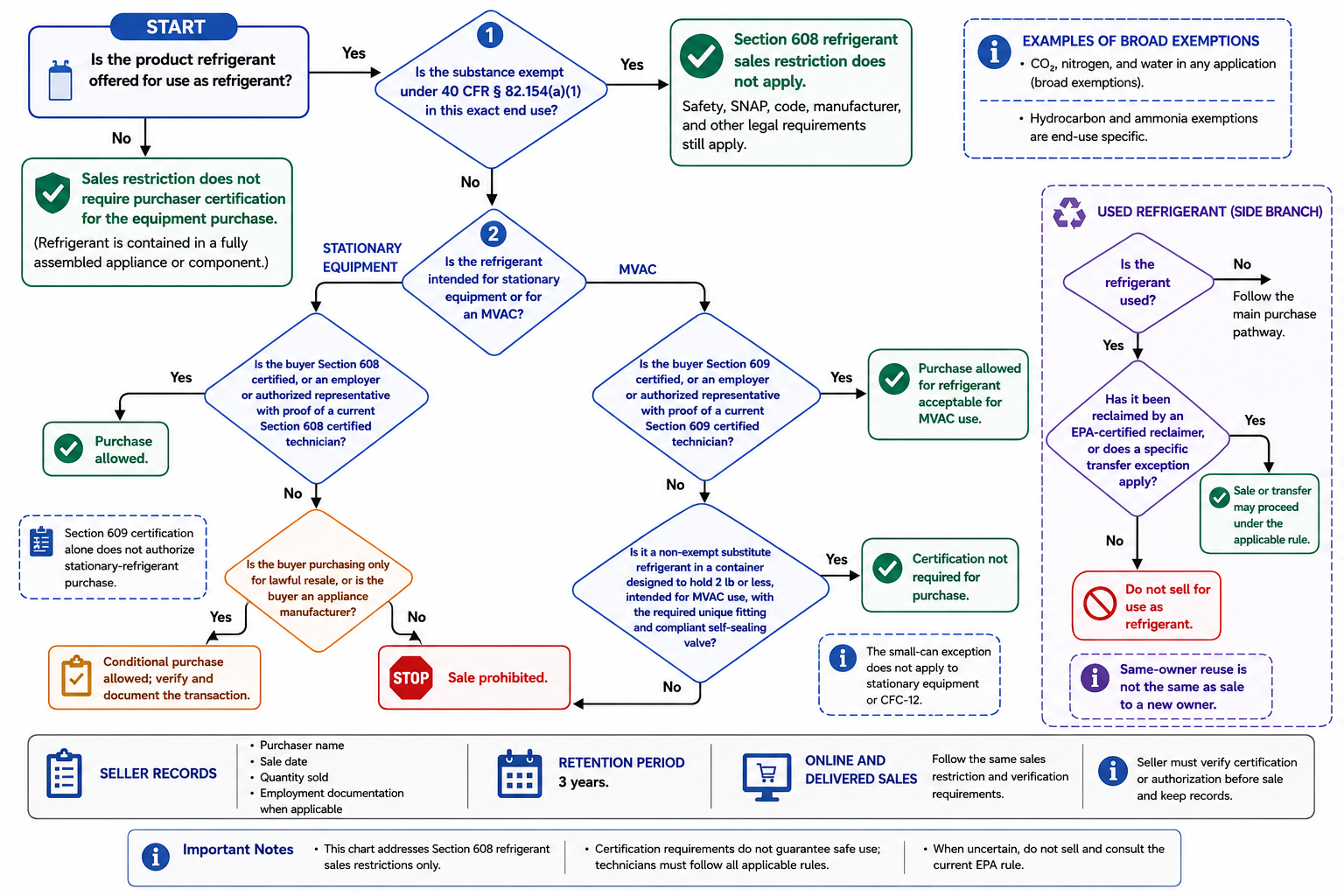
Figure 2.6.1 – Decision process for determining lawful refrigerant-purchase authority.
AI-generated instructional figure: It may contain visual inaccuracies. Use the accompanying lesson text and cited authoritative sources to verify technical and regulatory details.
EPA 608 Exam Focus
What Students Must Remember
- The sales restriction applies to Class I, Class II, and non-exempt substitute refrigerants.
- The restriction was extended to HFCs and other non-exempt substitutes beginning January 1, 2018.
- Section 608 certification supports purchase of refrigerant for stationary-equipment work.
- Section 609 certification supports purchase of refrigerant acceptable for MVAC use.
- Section 609 certification alone does not authorize purchase of refrigerant intended for stationary equipment.
- An employer may purchase refrigerant if it employs a certified technician and provides proof.
- An authorized representative may complete the transaction for a qualifying purchaser.
- The small-can exception applies only to non-exempt substitute refrigerant intended for MVAC use.
- The qualifying container must be designed to hold two pounds or less.
- The can must have a unique fitting and the required self-sealing valve.
- The small-can exception does not apply to stationary-equipment refrigerant.
- Small CFC-12 MVAC containers are subject to a separate Section 609 purchase requirement.
- Sellers must verify the purchaser’s allowed status.
- Sellers must retain the purchaser name, sale date, and refrigerant quantity.
- Employment documentation must be retained when the purchase is based on a certified employee.
- Sales-restriction records must be kept for three years.
- Used refrigerant generally must be reclaimed before sale to a new owner.
- Same-owner reuse is different from sale to another owner.
- Online sales are subject to the same restriction.
- Purchase authority does not establish SNAP acceptability or retrofit suitability.
Typical Exam Question Patterns
Students may be asked to:
- Identify which certification permits a stationary-refrigerant purchase.
- Determine whether a Section 609 technician can buy R-22 for a stationary appliance.
- Identify the conditions for an employer purchase.
- Determine whether an office manager may pick up refrigerant.
- Identify the small-can MVAC size limit.
- Determine whether a one-pound R-410A can qualifies for a homeowner.
- Distinguish the substitute-refrigerant exception from the CFC-12 rule.
- Identify required retailer invoice information.
- Identify the three-year record-retention period.
- Determine whether unreclaimed used refrigerant can be sold.
- Distinguish same-owner reuse from sale to a new owner.
- Identify an outdated pre-2018 HFC sales statement.
High-Priority Purchase Summary
| Exam Clue | Best Association |
|---|---|
| Stationary refrigerant | Section 608 purchase pathway |
| MVAC refrigerant | Section 609 purchase pathway |
| Employer purchase | Proof of current certified employee |
| Coworker pickup | Allowed as authorized representative for qualifying account |
| Non-exempt MVAC substitute, 2 lb or less | Possible small-can exception |
| Unique fitting and self-sealing valve | Required small-can features |
| Small R-410A can for home heat pump | Certification required |
| Small CFC-12 can for MVAC | Section 609 certification required |
| Seller invoice | Purchaser, date, quantity |
| Retailer records | Keep 3 years |
| Used refrigerant sold to new owner | Reclamation generally required |
| Fully assembled appliance | Purchaser certification generally not required for equipment sale |
Common Mistakes and Confusing Points
Mistake 1: Assuming Only Ozone-Depleting Refrigerants Are Restricted
The restriction also covers non-exempt substitutes such as HFC and HFO refrigerants.
Mistake 2: Assuming Every EPA Certification Authorizes Every Refrigerant Purchase
Section 608 and Section 609 apply to different equipment scopes.
Mistake 3: Assuming Section 609 Allows Stationary-Refrigerant Purchases
Section 609 certification alone does not authorize refrigerant intended for stationary equipment.
Mistake 4: Assuming a Business Name Is Enough
A company must provide proof that it currently employs a certified technician.
Mistake 5: Assuming Only the Certified Technician May Physically Pick Up Refrigerant
An authorized representative may complete the transaction for a qualifying account.
Mistake 6: Applying the Small-Can Exception to Stationary Equipment
The exception is limited to qualifying non-exempt substitute refrigerant intended for MVAC use.
Mistake 7: Applying the Two-Pound Exception to CFC-12
Small CFC-12 MVAC containers are governed by the separate Section 609 certification rule.
Mistake 8: Treating “Small” as an Unspecified Quantity
The current rule uses a container designed to hold two pounds or less.
Mistake 9: Assuming Online Sales Are Unrestricted
Online and remote sellers have the same verification responsibilities.
Mistake 10: Selling Recovered Refrigerant Directly to Another Owner
Used refrigerant generally must be reclaimed before sale to a new owner.
Mistake 11: Confusing Purchase Authority With Retrofit Approval
Certification does not make an unsuitable or unacceptable refrigerant legal for every appliance.
Mistake 12: Using a Pre-2018 Study Guide as Current Sales Guidance
The current rule includes non-exempt substitute refrigerants.
Concept-Check Questions
Question 1
Which certification generally supports purchase of R-410A intended for a stationary split-system air conditioner?
A. Section 609 certification
B. Section 608 certification
C. A refrigerant-manufacturer training card only
D. No certification because R-410A has zero ODP
Question 2
A company employs a properly certified Section 608 technician. May an office manager pick up refrigerant for the company?
A. No, only the technician named on the card may complete the transaction.
B. Yes, when the company has provided the required proof and the office manager is an authorized representative.
C. Yes, but only for exempt refrigerants.
D. No, employers may never purchase refrigerant.
Question 3
Which statement about Section 609 certification is correct?
A. It permits purchase of any refrigerant for stationary equipment.
B. It replaces Universal Section 608 certification.
C. It supports purchase of refrigerant acceptable for MVAC use but does not authorize stationary-equipment refrigerant purchases.
D. It is required for every household refrigerator.
Question 4
Which container can qualify for the uncertified small-can MVAC purchase exception?
A. A three-pound container of HFC-134a
B. A one-pound container of R-410A intended for a home heat pump
C. A one-pound container of CFC-12
D. A two-pound-or-less container of non-exempt substitute MVAC refrigerant with the required unique fitting and self-sealing valve
Question 5
Which information must a seller’s refrigerant invoice include?
A. Purchaser name, sale date, and quantity purchased
B. Technician’s annual income and vehicle identification number
C. Appliance serial number for every cylinder purchase
D. Refrigerant pressure and ambient temperature at the time of sale
Question 6
How long must the applicable refrigerant-sales records be retained?
A. 30 days
B. 1 year
C. 3 years
D. Permanently
Question 7
A technician recovers R-134a from one customer’s appliance and wants to sell it directly to a different customer. What is generally required first?
A. The refrigerant must be reclaimed by an EPA-certified reclaimer.
B. The technician must add nitrogen to the cylinder.
C. The refrigerant must be mixed with virgin R-134a.
D. Nothing, because recovery alone permits resale.
Question 8
Which statement about purchasing a factory-charged household refrigerator is correct?
A. The consumer must hold Type I certification before purchasing the refrigerator.
B. The refrigerant sales restriction generally does not require purchaser certification when refrigerant is contained in the fully assembled appliance circuit.
C. Only a Section 609 technician may purchase it.
D. The appliance must be empty of refrigerant at the time of sale.
Answers and detailed explanations will be provided in
2.11 - Answers and Explanations.md.
Section Summary
The Section 608 sales restriction limits the sale of Class I, Class II, and non-exempt substitute refrigerants to allowed purchasers and transactions.
The principal purchase pathways are:
- Section 608 certified technicians for stationary-equipment refrigerant.
- Section 609 certified technicians for refrigerant acceptable for MVAC use.
- Employers and authorized representatives supported by proof of a current certified technician.
- Lawful resale transactions.
- Appliance manufacturers.
- Qualifying small-can MVAC purchases.
The limited small-can exception applies only when:
- The refrigerant is a non-exempt substitute.
- It is intended for MVAC use.
- The container is designed to hold two pounds or less.
- The container has the required unique fitting.
- The applicable self-sealing-valve requirement is met.
The exception does not authorize:
- Stationary-equipment refrigerant purchases.
- Purchase of small CFC-12 cans without Section 609 certification.
- Paid MVAC service by an uncertified person.
- Intentional venting.
Sellers must verify the purchase basis and keep the required invoices and employment records for three years.
Used refrigerant generally must be reclaimed by an EPA-certified reclaimer before sale to a new owner. Recovered or recycled refrigerant can be reused for the same owner under the applicable rules.
References
Current EPA and Regulatory Sources
-
U.S. Environmental Protection Agency, Refrigerant Sales Restriction, last updated March 23, 2026 and accessed August 6, 2026.
-
U.S. Environmental Protection Agency, Recordkeeping Requirements for Refrigerant Retailers, last updated March 23, 2026 and accessed August 6, 2026.
-
U.S. Environmental Protection Agency, Questions and Answers about the Refrigerant Sales Restriction, accessed August 6, 2026.
-
U.S. Environmental Protection Agency, EPA’s Refrigerant Management Program: Questions and Answers for Section 608 Certified Technicians, accessed August 6, 2026.
-
U.S. Environmental Protection Agency, Section 608 and Section 609 Overlap, accessed August 6, 2026.
-
U.S. Environmental Protection Agency, Regulatory Requirements for MVAC System Servicing, accessed August 6, 2026.
-
U.S. Environmental Protection Agency, Section 609 Technician Training and Certification Programs, accessed August 6, 2026.
-
U.S. Environmental Protection Agency, Stationary Refrigeration Refrigerant Reclamation Requirements, last updated March 24, 2026 and accessed August 6, 2026.
-
U.S. Environmental Protection Agency, Recordkeeping and Reporting Requirements for Stationary Refrigeration, accessed August 6, 2026.
-
U.S. Environmental Protection Agency, Regulatory Updates: Section 608 Refrigerant Management Regulations, accessed August 6, 2026.
-
Electronic Code of Federal Regulations, 40 CFR § 82.154 — Prohibitions, current through August 4, 2026 and accessed August 6, 2026.
-
Electronic Code of Federal Regulations, 40 CFR Part 82, Subpart B — Servicing of Motor Vehicle Air Conditioners, accessed August 6, 2026.
-
Electronic Code of Federal Regulations, 40 CFR Part 82, Subpart F — Recycling and Emissions Reduction, accessed August 6, 2026.
-
Electronic Code of Federal Regulations, 40 CFR Part 82, Subpart G — Significant New Alternatives Policy Program, accessed August 6, 2026.